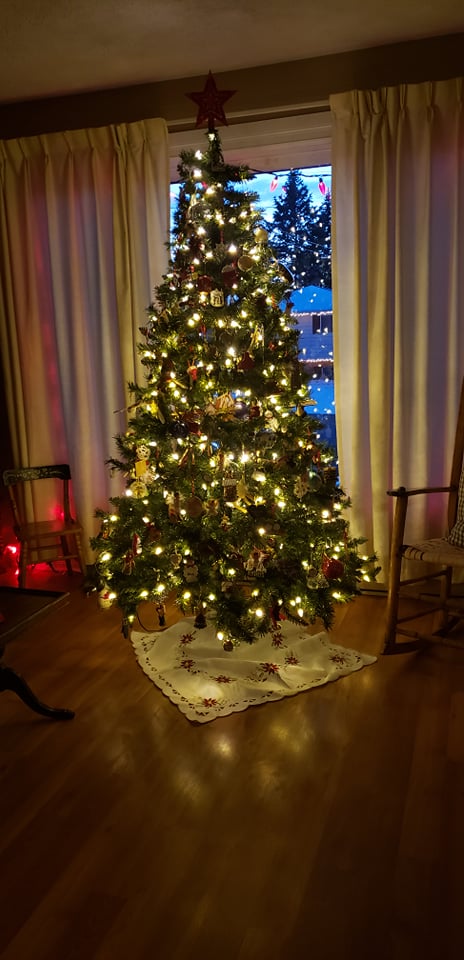
Many of the Christmas traditions we adhere to each year are actually based on pagan celebrations, notably those belonging to the Romans, Celtics, Norse, and Druids. Let’s start with the Christmas tree itself.
Early Europeans, many of whom were nature worshippers of one form or another, began decorating their houses with evergreen branches long before the arrival of the Messiah as a way to add color and brightness to their homes during the longest days of the winter season. No doubt it improved the aroma, too. For the Romans, that time occured between December 17 and December 23 as a way to honour the God Saturn, not the mightiest of the gods, but a deity of great importance.
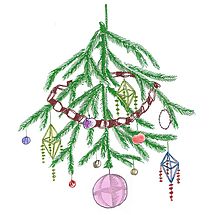

Post Christianity, Christmas trees became a symbol of the holy birth as well as the Trinity, but those trees didn’t look a lot like ours. Why? Because they hung upside down from the ceiling. This practice originated in the middle ages when Saint Boniface, a Benedictine monk, first used the tree as a ‘show and tell’ object in his lessons to pagan Germanic tribes.The idea was popular right into the nineteenth century, especially among the working poor who hung trees from their rafters for both religious and secular reasons. Houses were small, lacking floor space. Upside down Christmas trees are actually seeing a comback, and when you consider houses with pets and small children, that makes sense, but I think I’ll stick to mine.
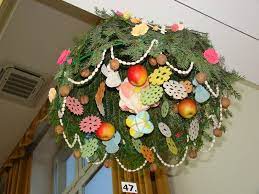
The people who resided in what is now southern Poland were especially proud of their podłazniczek tradition. They used fruit, nuts, candies wrapped in colorful material, straw, ribbons, and painted pine cones to decorate spruce trees dangling from the celing in the middle of the room. Eventually, more home and handmade decorations were added. In many homes, that tradition continues today.
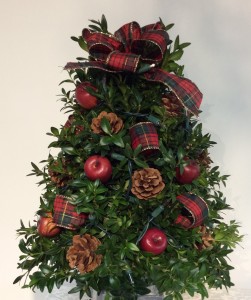
Our modern version of a Christmas tree had another beginning, one also found in Germany. Religious plays were popular during the medieval era. Among them was one depicting Adam and Eve’s fall from grace and expulsion from the Garden of Eden. One of its props was an evergreen called a paradise tree, decorated with apples–the forbidden fruit–and wafers, symbolizing Christ as communion wafers The people would set these paradise trees inside their homes on December 24th. Eventually apples were replaced by balls and wafers gave way to cookies, ribbon, and pinecones.
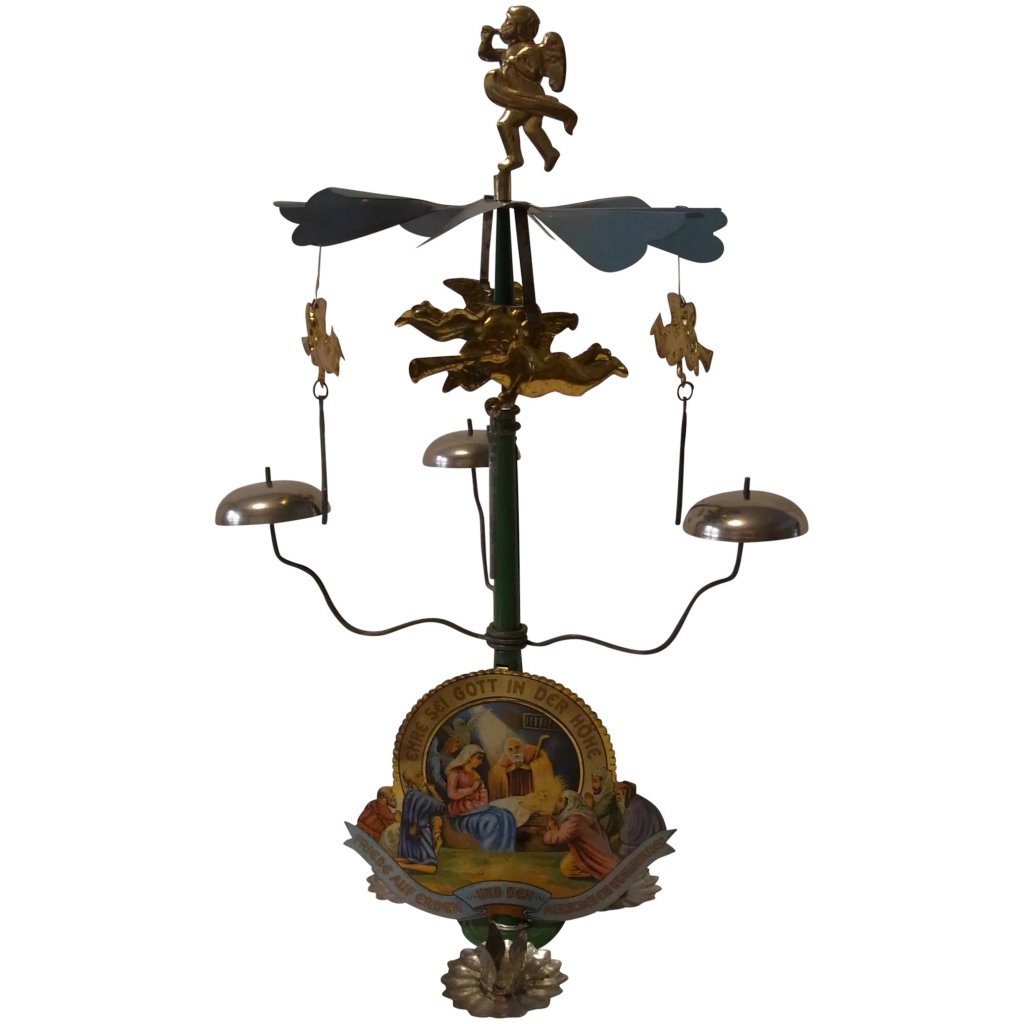

Those who didn’t have trees might have a Christmas pyramid instead. These items weren’t actually shapped like pyramids They were a type of carousel which turned because of the heat generated by candles. You may even have seen one and not known what it was. Some of the Christmas pyramids were relatively plain, and depicted religious images, while others were more elaborate and focused on everyday life. Christmas pyramids remain popular today. But, for the most part, the paradise tree and Christmas pyramid merged into what we call a Christmas tree today.
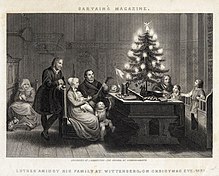
The tree evolved once more in the sixteenth cetury when Martin Luther placed candles in the branches to symbolize the stars in heaven. What a fire hazard that must’ve been! Today, most trees are decorated with electric lights, some of them all white like candles would’ve been, others multicored. My tree can be programmed for either, but then, for a number of reasons, I have an artificial tree.another evolution.

This picture of me and my mother–I was four–was taken in front of my grandmother’s tree. My grandfather would go out and find the perfect tree, usually a spruce, and then he would spray paint it all white. To me this indoor snowcovered tree was an incredibel sight to see. How bright the colored bulbs seemed, surrounded by angel hair to protect the tree from catching fire. The balls were all made of glass and super delicate. I still have a few hanging from the branches of my own tree.
Today, while green appears to be the most popular color for both real and artifical pines. anything is possible. You can find then in all shapes and colors. Remember Mrs. Trump’s red trees? I’ve seen pink, and purple, too. They aren’t all real, although if you like your tree up for the entire Christmas season, then an artificial one may well be the safest. These lovely decorations brighten our homes at the dreariest time of year. Given the pandemic and all of the other horrors we’ve faced the last two years, it could well explain why decorating earlier than ever was the theme this year.
So, is your tree up yet? How do you decorate it? Do you give it a theme, select a colour scheme? Or like me, is your tree full of memories of the significant events in your life. And if your traditions don’t involve a Christmas tree, what is your most signifigant item/ event that gets you though the darkest days of winter?
I have several holiday themed romances for you to enjoy.






Check them out on my website, https://mhsusannematthews.ca/
Come back tomorrow for another Christmas tradition.
 Living the Dream
Thanks for the interesting post, Susanne. I love the picture of you and your mom. Family photos are so precious. Your grandfather had a fantastic idea– painting the tree white. That had to be glorious for a child to see each year. I well remember angel hair. My favorite tree was a blue one that my mom displayed in our restaurant picture window. I still see it in my mind’s eye.
LikeLiked by 1 person
I remember the year they moved from a real tree to an atificial one that was just metal branches with tinffoil on them. They had a lamp that spun and changed color. Now that was magic.
LikeLike