Another Christmas tradition rooted in paganism is the act of gift-giving. Think it started because of the gifts of the Magi? Think again.

The custom of giving gitfs at Christmas originated with Saturnalia, the Roman feast celebrating the god Saturn.
Unlike the mega shopping blitz of today, Saturnalia gifts were small and given for luck. It was also considered proper to give charity to those less fortunate, something that contiunues to be popular at this time of the year.
As Christianity grew in the Roman territories, the custom of gift-giving moved over to New Year’s Day. In the 4th century, the church made December 25th the official birthday for Jesus, and tied the tradition of giving gifts to those presented by the Magi–gold, frankincense, and myrrh. The song, We Thrre Kings clearly explains the symbolism of each gift.
They tied that Biblical incident to the legend of Saint Nicholas a fourth-century Christian bishop who was known for his generous gift-giving. Gradually, the practice of giving gifts became a part of Christmas celebrations.
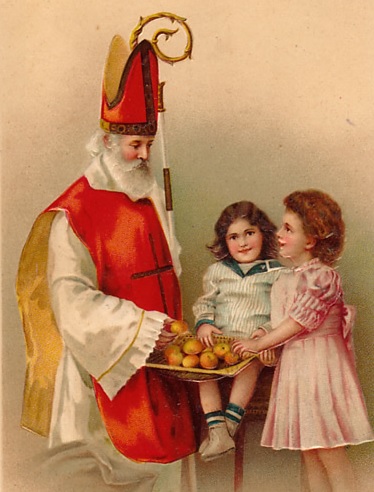
Not every ruler interpreted the practice the same way, and some saw it as a time to gather tributes and tithes during that period. The story of Good King Wenceslas changed that thinking. Soon gift-giving to superiors was replaced by gifts to children. In some countries, gifts were exchanged on other days than Christmas itself. For some, gifts were given on December 6, St. Nicholas Day, while others were given on New Year’s Eve. The custom of gift giving at Christmas was given a boost by books such as A Visit From St. Nicholas and Dickens, A Christmas Carol. In fact some gave gifts on each of the Twelve Days of Christmas. Today’s custom of giving gifts got a real boost from the Coca-Cola company in the 1930s, but that’s tomorrow’s story.
While the beginning of giving gifts might have started small, today it is a billion dollar industry that can make or break a company. Now people try to outdo one another in a frenzy of mass consumerism and greed.
See you tomorrow.
 Living the Dream