Welcome to this week’s Tuesday Tales and another scene from Beneath the Ashes. Picture prompt scenes are limited to 300 words. Here’s my picture. Enjoy.
“I appreciate that, thank you. I do feel badly about being dumped on you like this. No one wants a guest who overstays her welcome.”
He shook his head. “You could never do that, and please. from now on, this is your home, too.”
She unfastened her seatbelt, opened the car door, and grabbed her purse off the floor.
“Leave the backpack.” He reached for her hand and led her out of the garage onto the terrace.
“It’s incredible,” she whispered, staring ahead at the Bay of Naples.
“I love my work in Herculaneum and Pompeii, but the minute I saw this place, I knew it was the house I wanted. It was a ruin, having sat empty longer than it was ever occupied, and barely escaping the damage from two wars and countless earthquakes, but I belonged here.”
“The … the statues.” She seemed pale, but that could be the light. “Where did you find them?”
“They were here when I bought the house. The original Casa della Sirena is built over the ruins of a villa built before Vesuvius erupted. I had a look at the old plans, but I don’t think the place was ever completed. The statues were here when the casa was built in the early twentieth century. Sadly, the owner had no children, so it sat here alone and unwanted after his death.”
“But it’s so beautiful.”
Not as beautiful as you, he wanted to say. Instead, he led her toward the house.
“There’ll be a full moon tonight. I love sitting out here with a glass of brandy after dinner, watching it rise. There’s nothing quite like it.” He crossed the terrace and opened the door. “Rosa,” he called into the chouse. “Our guest has arrived.”
That’s it. Stay safe, and don’t forget to check out the other Tuesday Tales.
Welcome to this week’s Tuesday Tales. I’m pleased to say that spring appears to be here to stay! This week, our word prompt is STONE. I’m continuing with my contemporary paranormal romance, Beneath the Ashes.
Lucie stared at the man whose voice caressed her like a lover even if his appearance didn’t seem familiar. The remnants of his cologne, a cedar-based one that she’d always found appealing, tickled her nostrils and touched her memory.
Pull yourself together, Lucie. This isn’t the time to go off again.
He’d made an overture of friendship. The next step was hers.
“Thank you, Dr. Tedesco. The picture was taken after a day on the site. I’m sure I still had dirt on my face.” She moved closer to his and held out her hand.
Instead of shaking it, he took it gently, raised it to his lips, and kissed it, his salt and pepper beard as soft as silk, stroking the area where it touched her skin, sending lava racing through her veins to pool in her core. She shuddered, swaying slightly, and caught her breath audibly. He released her.
The pulse at the base of his throat, clearly visible since the shirt was unbuttoned at the neck, throbbed hard enough for her to see. Had he felt something, too?
“Please, you must call me Mario, and like Trent, I’ll call you Lucie. We’ll leave the titles to the students. We’re equals here, and speaking of here, are you ready to peek into the abyss?”
She was certain he meant more by his words than what he was saying. The heat of desire filled her. She swallowed. What was wrong with her? This man wasn’t her type—far from it. She forced herself to calm down and behave the way she always had when out of her element, drawing on a stoicism she’d mastered long ago when her parents had divorced.
“It’s a pleasure to meet you, sir.” Was that breathy voice hers? Damn. As off kilter as she was, it was a miracle that she could frame a cohesive thought, let alone speak it. How could this stranger’s touch illicit such a powerful response? She swallowed, searching for words. “I wasn’t aware that there was much to see from up here, but yes, that would be great.” It would give her a chance to prepare herself for what might come, to try and figure out what game fate was playing now, and design a response to it. For every action, there was a reaction. All she needed was to know which one would be the right one. Moving closer to him, she crossed the uneven ground, littered with rocks and stones. She stumbled, and Mario grabbed her before she could fall, the heat of his touch burning its way through her.
That’s it. Stay safe, and don’t forget to check out the other Tuesday Tales.
Welcome to this month’s Insecure Writer’s Support Group blog. After a month of blogging from A to Z I feel the need to keep going, so today’s blog is perfect for that. This month’s question:
When you are working on a story, what inspires you?
It’s hard to answer this question becasuse for me, it depends on the book. If I’m writing a story based on where I’ve been, then it’ll be pictures and souvenirs. If I’m writing a book based of a place I’ve never been, a historical event, a book about something like genetics, or even a suspense novel, then the answer is research. What I learn along the way can become a scene in the book or a means to fuel a character’s actions. Currently, I’m working on a novel that blends scenes from the past with those of the present. I’m writing a book for my Timeless Love series where the characters died in 79 CE when Pompeii erupted. Now, the two have been reborn and have a chance to be together again.
I have a Bachelor of Arts degree with a concentration on English and history, many of the history courses based on Ancient civilizations, specifically Greek and Roman. I did additional research on Pompeii. I was surprised to discover that while there’s a Latin word for earthquake, there isn’t one for volcano. How to explain the earthquakes around Mount Vesuvius? They believed that beneath the mountain was the lair of the giant Vesuvius, imprisoned there by Vulcan. When he awoke, the earth shook until Vulcan settled him again. Big earthquakes like the one in 62 CE that did so much damage meant there had been a battle between the god and his prisoner. In these days of modern science, it’s hard to believe anyone could be that naive.
So, I guess my answer to the question would be research motivates and inspires me. Check out the other answers here.
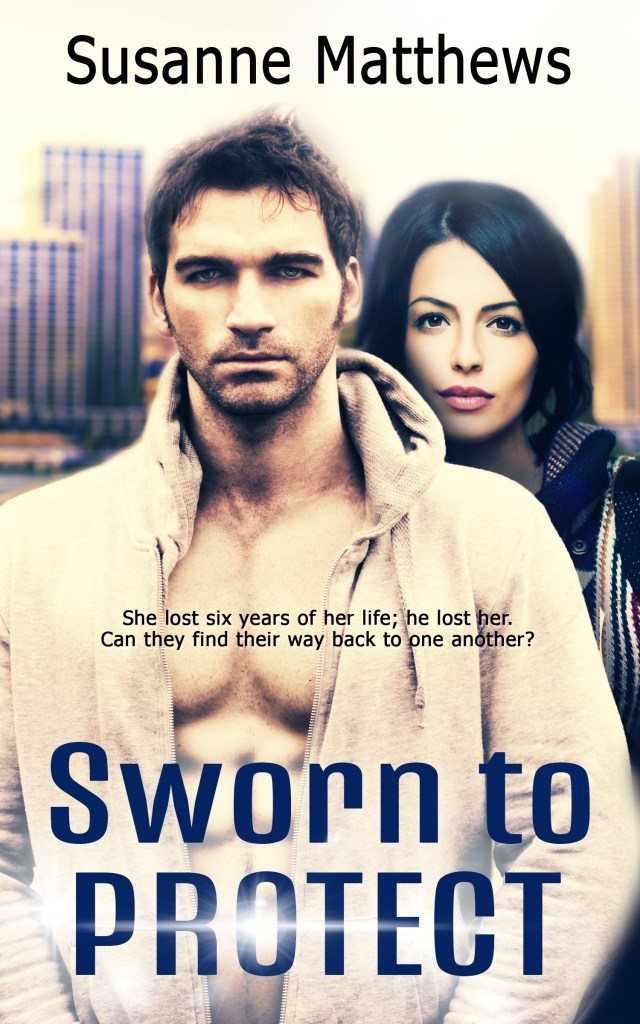
Have you ever wanted a do-over, a chance to go back and make things right? At times, we all do, but for Neil and Nancy, they may have a chance to do just that.
Four years ago, a car accident robbed Nancy Frost of her child and her mother, taking what was left of her marriage with it in the process. A forensic accountant, she agrees to look at a company’s books in a divorce case, trying to find hidden assets, but her meeting with the lawyer goes terribly wrong when the restaurant is attacked.
The moment US Marshal Neil Copeland discovers his wife has been shot in a Baltimore restaurant, he rushes to her side, determined not to let her down again. As the police investigate, evidence suggests the attack was a ploy to hide a specific hit. When a professional assassin tries to kill Nancy a second time, it’s clear that she was the target and whatever’s going on is a lot more complicated than they think.
When Nancy awakes after a month in an induced coma, not only does she not remember the attack on the restaurant, she doesn’t remember marrying Neil.
Faced with the challenge of protecting his wife from a powerful, faceless enemy, Neil must bring her up to date, dredging up all the sorrow that tore them apart in the first place, hoping something will jar her memory.
As he races against time, can he save her from an unknown assassin and convince her to give the love they once had a second chance?
You can pick up Sworn to Protect this month for only 99 cents! As always, it’s free to read on Kindle Unlimited https://www.amazon.com/dp/B072MHFQJF
Welcome to this week’s Tuesday Tales. Our word is INTENSE, and I’ve used the verb form of the word in a post from my current work in progress on a new book from a new series called Timeless Love. The first book, Beneath the Ashes, deals with a love lost when Mount Vesuvius blew its top and destroyed Pompeii, Herculaneum, and much of the area around the Bay of Naples. The idea for this story originated ten years ago when I wrote a short story on the topic.
Enjoy a quick taste of Beneath the Ashes.
Lucie’s heart pounded as she struggled to hide what was happening to her. She clenched her hands on her lap. Damn! She’d done so well all day and now … The feelings of déjà vu intensified as they neared the site of the Villa dig. As had happened in Rome, the past superimposed itself on the present. Along the bumpy, makeshift road, she glimpsed the shadows of the citrus trees that had produced the sweetest oranges. Beside them was the apricot orchard, and next to it, the olive grove.
When Trent stopped the vehicle, the house Julius had designed specifically for her, for them, wavered in front of her, shaded by the stone pine trees, the other bushes, and the plants surrounding it, welcoming her home. Beyond it would be his pride and joy, his vineyards. Far off in the distance, no more than mere dots of black and white on the verdant hill, sheep grazed.
Twisting in her seat, she looked back at Vesuvius, seeing not only a mountain with a rounded top, but the volcanic monster with a jagged crown who’d caused death and destruction.
As quickly as the vision had arisen, it vanished, leaving behind the damage done to the farmer’s field by the machinery, tents, fencing, and other paraphernalia that now surrounded her. The only thing that remained of her delusion were the sheep. Her hands trembled and cold sweat snaked down her back.
Trent glanced at her. “Are you okay? You seem a little pale.”
“Just tired,” she managed to say. “I suppose I’m still a little jet-lagged.”
Trent opened his door. “Yeah. Usually takes me a week to settle after I come back from a trip home. Mario’s on his way, and he looks lemony. This work is important to all of us, but it consumes him, and anything that might interfere tends to make him cranky—not that you’ll interfere, but you might present a distraction. Like me, he’s not expecting anyone like you, so if he seems like a stunned mullet, completely stonkered, you’ll have to give him a break.”
She blinked. At times his Australian expressions stymied her. “I’m assuming you mean he’ll be surprised because he was probably expecting a mousy old lady, with the dust of the ages bending her back, or a crusty old battle-axe fighting for recognition in a world of men. I did notice that all your staff is male.”
That’s it. Stay safe, and don’t forget to check out the other Tuesday Tales.
We made it! Today is the last day of the challenge. I’ve enjoyed writing these posts and hope you have enjoyed reading them, too, and that in the process, you’ve learned a bit about me, my writing style, and my books.
My last post for Z this year is Did You Know that with all of the authors and books out there these days, an Indie writer has to be zealous about her craft? Zealous means to be devoted, diligent, enthusiastic, passionate, fanatical about something. It means sacrificing and sweating over it, and spending countless hours on it.
As a writer, I am all of those things. I put in hours at the computer writing, researching, reading, blogging, doing anything I can to get my books noticed. When it comes to facts about histroy or locations I’m fanatical about getting things right. I may get down on myself every now and then because what I believe is an incredible book isn’t making it, but I don’t give up. I simply switch gears and try something else. I start each new book full of zeal and hope that this one will be the one.
This is it for the year. If you’ve enjoyed my posts, follow me. I don’t post every day, but I do announce new book releases here.
It’s a typical spring day here, one with dark skies and rain, but since I have to work to meet the deadline on my new book, it works for me.
Today, my Did You Know? is all about Young Adult fiction. Did you know that along with all the other books I’ve written I did write a Young Adult Suspense Novel? Prove It is a clean story, geared to the 12-18-year-old reader, but that will appeal to older readers looking for easy to read suspense. It was written as a gift for my granddaughter and deals with peer pressure and sports. discussing the ugly practice of gambling on high school sports. At the time I wrote the book, I’d been reading about a mother who’d murdered a competitor to secure a spot on a cheerleading squad. If a parent would do that, what else would they do? That’s when I found articles on the gambling.
Writers try to make their novels appealing to the readers by creating believable plots. In this case, I just had to Prove It!
High school sports can be more dangerous than you think!
Ivy Hill’s track star, Liam Howard, has his future all mapped out: date Hannah Connors, win the New Horizon scholarship, get a spot on the next Olympic team, and then go to medical school. Sounds simple, especially when he’s well on his way to achieving his dream. But someone else has other plans. Ignoring the most recent threatening note, Liam goes out for his regular practice run and is struck by a vehicle and left for dead.
Hannah refuses to believe Liam will never walk or run again, especially when she learns the person behind the accident may be her own track coach. Working with Erik Jenkins, Liam’s best friend, she searches for proof, but Erik vanishes on his way to see the coach. Now, it’s up to her, Liam, and their friends, to find Erik and the evidence they need to put a hit and run driver behind bars. But time may be running out for both Erik and Liam as someone tries to finish the job they started, regardless of collateral damage. Read the free preview to see for yourself.
Welcome back. The sun’s shining, and we’ll have double digits in temperature, so I’m hoping for some time outside and a chance to unwind.
Today’s letter is X ,and I’ve chosen X-rated to answer this question, did you know that the hardest scenes for me to write are the hot, steamy X-rated sex scenes? I tend to close the bedroom more often than not, and when I do leave it open, the sex is more sweet and endearing than X-rated. There are a number of reasons for that, but it all comes down to me. I am a fairly private person, not exactly a prude but not sexually adventurous either. I’ve been married to the same man, the one who picked my cherry, as they used to say, for 52 years come September.
I have a hard time putting my characters in bed after only a few hours let alone a few dates, so i tend to avoid those scenes unless they are critical to the plot. My knowledge of sex toys, sex fetishes is practically non-existent, and I know nothing about m/m, f/f, or any other combination you can think of. If there’s a sex scene in a book, it serves a specific purpose, or it isn’t there. That being said, the new book I’m working on will have a few steamy scenes. It’s a contemporary paranormal in my new Timeless Love series, dealing with a couple who died in Pompeii and are reunited when they discover their ash encased bodies.
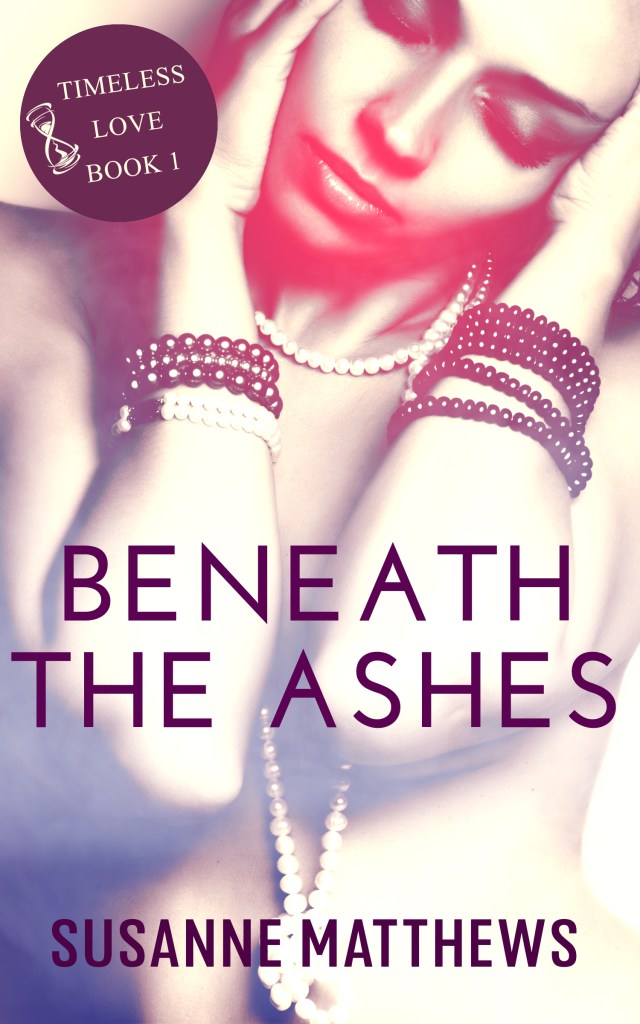
Here’s the cover reveal for Beneath the Ashes and its blurb.
Dr. Lucie Raines loves her job overseeing the Mediterranean Gallery and similar exhibits at the Penn Museum, feeling at home among the remains of Rome’s glory days. When she’s offered a chance to join an archeologist on a new dig in Pompeii, she jumps at it. Her excitement becomes tinged with confusion when she sees the advance items recovered from the dig. These bits and pieces of the past aren’t simply relics, they belong to her, or rather they did—but how is that possible? And the archeologist himself? Her reaction to him is so powerful, it scares her. Could he possibly be the man who’s populated her dreams over the years, making love to her as no one else can, leaving her unable to find love and happiness in the here and now?
In the shadow of Vesuvius, Dr. Mario Tedesco, has excavated the ruins of Pompeii for years, his days filled with hours of hard work, his nights with dreams that leave him restless and frustrated. When he discovers a new dig, one as yet undisturbed, he agrees to let an American expert on Roman antiquities join him—for a price. Her museum will get eighteen of the pieces in exchange for the cash he needs to finance the dig. But the archeologist has bigger problems. His dreams have intensified since entering the house, his sleep haunted by a beautiful woman, begging him to find her.
When Lucie Raines, the American expert arrives in Pompei, Mario’s confusion increases He’s convinced that she’s the woman from his dreams, but she insists on keeping her distance, almost as if she’s afraid of him, and what may happen if they give in to their desires. Can he convince her that their love, rooted in this place, is timeless? Or will the shadow and rumbles of Vesuvius separate them once more?
Here we go again, another day another blog post. Today is one of those days where everything that could go wrong has. I’m sure you’ve had days like that which is why mu W Did You Know? is this. Did you know wine helps me iron out the day to day wrinkles in both my personal and my writing life?
In 1785, Robert Burns wrote “The best laid plans of mice and men often go awry”. Two hundred and thirty-eight years later, that hadn’t changed and remains one of the constants in my life and probably yours, too. We all make plans, pencil them in on the calendar and then something throws a wrench in the machinery and all the carefully laid plans go poof!
When things get really wrinkled, I get stressed and then I don’t sleep. That’s when I realize that a glass of merlot or cabernet can help me relax and once I relax, I can iron out the wrinkles in a plot, or find a way to deal with the wrinkles in my life. Today, my mother was more absent than usual, and that makes it hard for me to focus. Then, the TV remote wouldn’t work properly, and that was a catastrophe of epic proportion in my husband’s eyes (I fixed it) and my allergies are acting up. Plus, with the weather vacillating from spring to winter and back again, I don’t even know how to dress.
Tonight will definitely call for glass or two of wine.
I’ll leave you with a scene from Make Mine a Manhattan. Someone else was having a bad day.
for lunch with Callie and Mickey.”
The bell rang announcing the arrival of another customer.
Thank you, Lord.
“Fine,” Mom agreed, but her tone made it clear she wasn’t happy about it. “Maybe he doesn’t need a date per se. There will be plenty of single women there. I’ll see you at one thirty sharp.”
She frowned, her mask moving up her face almost obliterating her eyes.
I sighed, knowing full well that this wouldn’t be the end of it, but if I didn’t make lunch, I wouldn’t survive the lecture that was sure to follow.
“I’ll be here.”
Turning abruptly, I collided with the mountain behind me, splashing my iced capp all over both of us, the beige froth settling and melting on top of his loafers.
A collective gasp filled the room, and I was suddenly aware of the dozens of gazes fixed on me. This was the icing on my sucks-to-be-me day!
There was Frank, the town mechanic and Sylvia who ran the dry cleaners. Was that Mayor Loucks? Hard to tell with the mask, hat, and sunglasses. When news of my latest debacle got around—and it would do so at super-sonic speed, His Worship would be glad to have avoided setting up his big buyer with the Queen of Klutz and Bad Luck.
“Oh my God,” Mom cried. “What have you done? I swear when God was handing out clumsiness, you asked for a double dose. Don’t you ever watch where you’re going?”
Where I’m going? Injured party here!
Speechless, I gaped at the huge, wet spot spreading across the man’s tan shirt and khaki pants, scarcely noticing the fact that my white cotton t-shirt was just as wet. Tilting my head up, I stared at the black mask, mirrored sunglasses, and brim of a Panama hat. When had I ever seen a man with such broad shoulders? To rub a little salt into the wound of my humiliation, despite my mask, the aroma of his aftershave tickled my nose, and I sneezed.
Heat filled my cheeks. No doubt the top half of my face was as red as a ripe tomato, and considering I had frizzy, carrot-colored hair, currently pulled up into a messy bun on the top of my head, it wouldn’t be a good look on me. I peered at the mess I’d made, suddenly aware of the fact that my tightened nipples were poking out of my wet shirt.
Mortification mixed with indignation, and my brain clicked into gear. I set the empty cup on the table beside me and tried to cover my wet chest with my arms.
The stranger just stood there, looking down on me.
Not known for my patience and diplomacy, I lashed out at him in a tone worthy of Katerina in The Taming of the Shrew.
“I’m so sorry. I didn’t know you were there. Of course, if you hadn’t been standing right on my ass, we might’ve avoided the collision. Or don’t you know what six feet, social distancing means?”
He hissed in a sharp breath but didn’t speak, no doubt because he knew I was right.
Mom raced around the counter with a damp cloth and a pile of napkins.
“Don’t just stand there, do something.”
Gritting my teeth, I grabbed the damp cloth from her, and started dabbing at the coffee on my t-shirt.
“Not you, for heaven’s sake,” Mom barked.
So much for motherly love and compassion!
Pasting a fake smile on my face, I turned to the man and began rubbing at the stain on his shirt and pants, praying they wouldn’t stain; otherwise, I would be expected to cough up for replacement designer clothes that cost more than my annual tax bill. My new t-shirt was probably ruined, and that annoyed me more, causing me to rub harder.
I stopped dead, my heart pounding out a primitive beat, my lungs refusing to function.
While the stranger had to be at least six foot six, I was barely five feet tall. Most of the coffee stain was on his crotch, a fact my addled brain had ignored. My hand was essentially massaging that area of his anatomy, and I could feel something cylindrical growing hard under it.
I jumped away as if I’d been tasered. The old, Is that a flashlight in your pocket or are you happy to see me joke ripped through my mind, and I smothered a giggle.
“Robin, you’re just making it worse,” my mother said, handing the man the pile of napkins. “Perhaps you would like to step into the washroom, sir?”
The man grunted and reached for the napkins. I couldn’t help noticing his hands. Whoever I’d collided with had the hands of a pianist, with long tapered fingers. What would it be like to have hands like that caress my body?
Good morning. It’s another undecided spring day here, but I’m slowly seeing Mother Nature’s green thumb as new life springs up all around me. Trees are budding, flowers are sprouting … ah, the joys of allergy season abound.
Today’s letter is V, and my Did you know? for the day centers on vision and visualizing. Did you know that there are two definitions of vision? There’s the sense everyone who has it takes for granted until something happens and they lose it, the ability to see and perceive objects using the eyes and optic nerves. The other definition is the ability to think about the future and make plans based on your hopes, dreams, wisdom, and more importantly, your imagination. Visualizing, on the other hand, means the ability to form a picture of something in your mind that, while you can’t actually see it, has been described well enough for you to imagine it.
As a writer, I prize my physical ability to see because it helps me describe the images using words, so that my readers can visualize a setting, a scene, or a character as the need may be. I use it and my other senses to paint pictures with words. I also use the other aspect of vision to plot the novel, plan for the action and resolution in a story. While I may write from the seat of my pants without formal plot diagrams, I always know where things are going–I’m just a little fuzzy about the how, where, and when.
Mike Branscomb continued suturing the Howard cat. At twelve, Cupcake had used up another of her nine lives, this time getting tangled in barbed wire fencing someone had left lying around. He would have to make an appeal to the farmers to keep that stuff safely stowed away. A lot of them had recently reinforced their fences hoping to keep the coyotes, cougars, and other predators away from their poultry and livestock. The more the town grew, the more animal habitats shrunk. Luke had done the same at the ranch. Mike had gone out a week ago to help.
This morning, knowing he had a heavy day of scheduled surgeries at the clinic, he’d gone out to the stable earlier to see Snowdrop, his sister-in-law’s mare who showed signs of foaling ahead of her due date. The horse was expecting twins, and while he’d done his best, whether or not the foals would survive was in the hands of the Almighty. Their odds weren’t good, but he’d seen animals beat the odds before—like this cat. Losing Cupcake would be hard on Mildred which was why the elderly woman needed to keep the calico inside.
Mike tied off the last suture as a wave of pain so profound it nauseated him, washed over him, dropping him to his knees in a manner far more effective than any football tackle had ever been.
Luke! The last time he’d felt anything close to this had been when his identical twin had been thrown from a horse almost thirty years ago … but this was a thousand times worse.
Something had happened to Luke—something bad. What the hell had that daredevil brother tried to do now? Taking his wife on a three-day romantic getaway should’ve been safe enough for any man, even one as foolhardy as Luke.
Cassie loved the Jasper Park Lodge with all of the outdoor activities in the area. It was where Luke had proposed. She enjoyed jogging, hiking, even rock climbing, but she usually managed to keep Mike in check, avoiding the more difficult ascents. So what had he done? Fallen off the damn mountain? The weather probably hadn’t helped.
It might only be the last week of September, but freak snowstorms were nothing new in this part of the Rockies. Timberton, the small town of less than two thousand or so hardy souls located just outside of Banff National Park, was ready for anything at this time of year. The temperature had been in the twenties only three days ago, and now it hovered around minus fifteen. Mother Nature couldn’t make up her mind about rain or snow, so she’d solved the problem and had sent both.
The impossibly loud jangling of the phone startled him, and he slowly rose to his feet, the pain still eating at him. A few minutes later, the door to the small surgery opened.
“It’s for you, Mike,” his receptionist said, her face chalk white.
He reached for the handheld extension on his desk, pressed the call answer icon as well as the speaker one.
Lucy backed out of the room, without making eye contact, and closed the door.
He swallowed the lump of fear threatening to choke him.
“Dr. Branscomb speaking.”
He prayed this was all a mistake, but the unbelievable pain still making him weak said otherwise.
“Mike, it’s Phil Madsen. The RCMP just called. There’s been an accident at the south end of the Icefield Parkway.” The sheriff paused, his tone ominous. “A trucker called it in just after it happened. The police dispatched a car. No way to sugarcoat it. It’s Luke and Cassie. No details yet. Might’ve swerved to avoid an oncoming car or an animal. They’ll be taken to Calgary as soon as they can manage it. Using the air ambulance is out of the question until the weather clears.”
Mike’s blood ran cold as goosebumps crawled up his spine.
“And that could take hours. I’m on my way. Can you let whoever’s in charge know?”
“I’ll do better than that,” Phil answered, his voice filled with sympathy. “I’ll pick you up at the clinic. You probably shouldn’t be driving after news like this. Besides, my vehicle is better equipped to travel in this weather than yours, and given the sirens and lights, I’ll make sure nothing slows us down.”
Phil gave a few more details about the location; some sunk in, others didn’t make sense. Luke was a careful driver. He would’ve been even more conscientious along that strip of the road, although why the hell he’d been driving in this weather was a mystery. A sudden thought stopped Mike in his tracks, his heart skipping a beat. “The girls?” He could barely utter the words.
“They aren’t in the car. I asked. I assume they’re back at the ranch with their nanny.”
“Of course.” While Cassie might’ve wanted to take the twin angels with her, Luke would’ve convinced her to leave the six-month-old infants behind to give his wife a rest and have some alone time with her. There was nothing wrong with wanting some quiet time with the woman you loved. The hard part was finding that woman in the first place. “I’ll be waiting out front for you.”
Like a robot, Mike ended the call and finished bandaging Cupcake before putting her back inside her cage. Moving to the basin, he took off his gloves and washed his hands before removing the rest of his surgical gear. Gritting his teeth to mask the pain, he stepped into the small waiting room.







 Living the Dream