A to Z Blog Challenge 2022: the Letter I

It’s Monday, the sun is shining, and all’s well with my immediate world. My arm no longer hurts, so I’m quite satisfied with things. I’ve enjoyed the comments I’ve received on my posts to date. That’s one of the best parts of blogging A to Z each year.

Today’s letter is the letter I. Once again, I had a variety of choices: idioms, imagery, impact. implicit, even imagination, but I’ve chosen to write about the “I” point of view, often called writing in the first person. I’ve always been a voracious reader–well until I became a writer and donated what had been my spare time to writing. I preferred books with a third person point of view where I could get inside the thoughts and motives of all the major characters in a story, the “he, she, it, they” stories. When I started writing, I stuck to my favorite style.

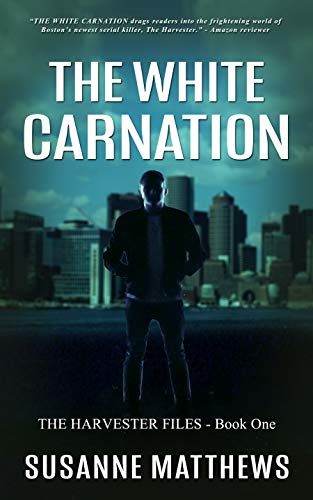
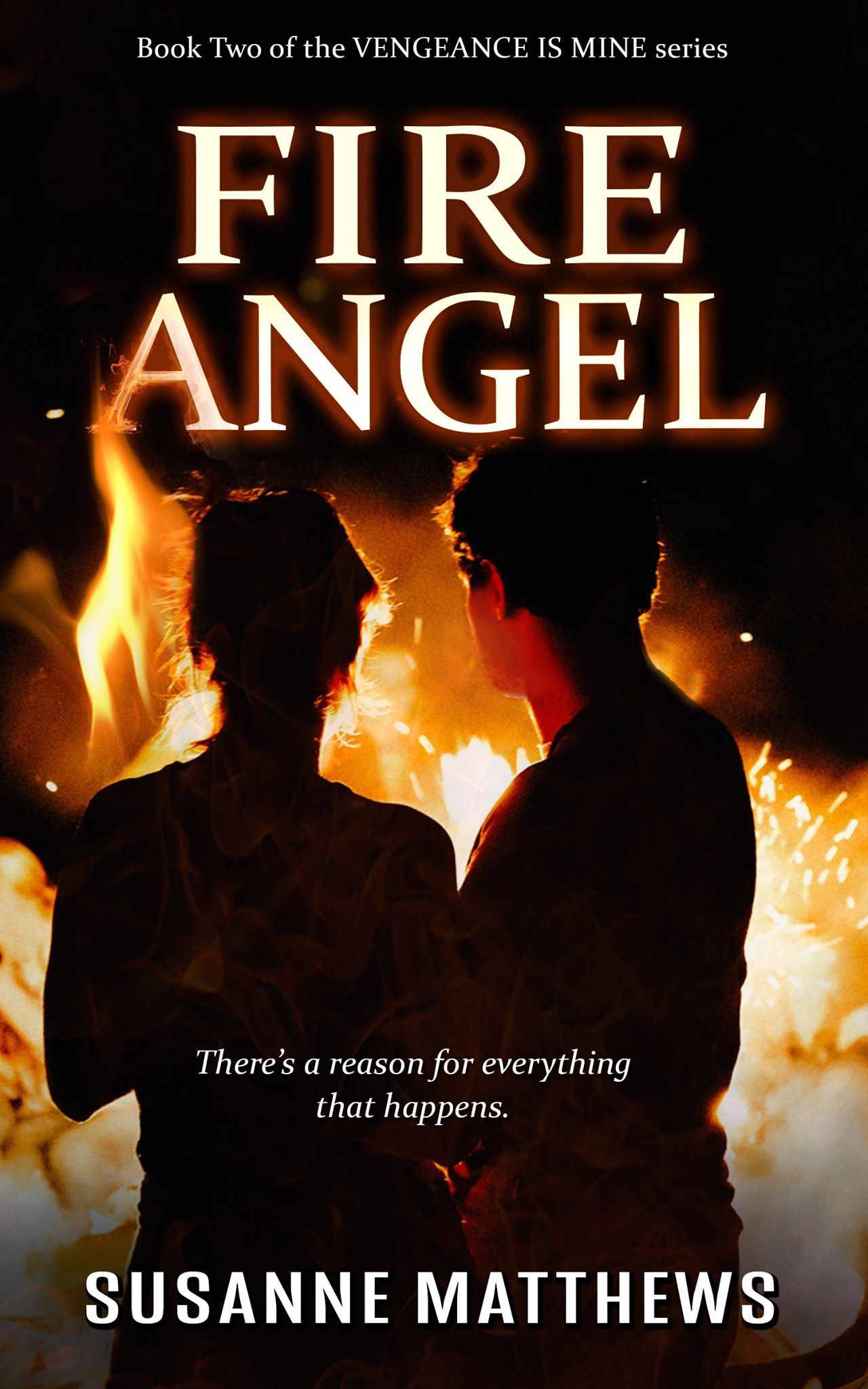
Most romance novels whether they be historical, contemporary, or suspense, rely on two points of view, that of the hero and the heroine. While that is sufficient, in a few of my romantic suspense novels, I’ve added a third, the villain of the piece, which allowed me to dig deeper into that sick mind. Fire Angel and In Plain Sight from my Vengeance Is Mine series have that POV trait.

With the onset of the pandemic, including the lockdowns, life changed, and I had more time to write. Let’s face it, we really couldn’t do anything else but cocoon in the safety of our homes. A friend encouraged me to try something new. She was always going on and on about my dry wit and sense of humor, so she suggested I try my hand at romantic comedy, what is sometimes referred to as chick-lit. Now, I’m quite far from being a chick. Even my children are beyond that, although I have grandchildren who might qualify. Social values have changed a great deal since I was in my twenties and thirties, and since, like many of my generation, I was married at twenty-one, I lacked hands-on experience, but, despite that, I decided to give it a try. The results are a series of books based partially on experiences I’ve had, but primarily on my highly developed imagination–I knew I’d get that in there. The resulting books are part of a series called Cocktails for You. What makes them different from my other books? They are all written in the “I” first person point of view. I struggled with this at first, knowing I had a very narrow range to work with, but once i got the hang of it, it was fun. To date, I have seven books in the series.

Writing in the “I” point of view limits the scope of the story to what the narrator sees, does, and hears, but there is considerable freedom in that. You can “tell” more than “show,” and you can allow the reader to live vicariously through the main character of the piece.

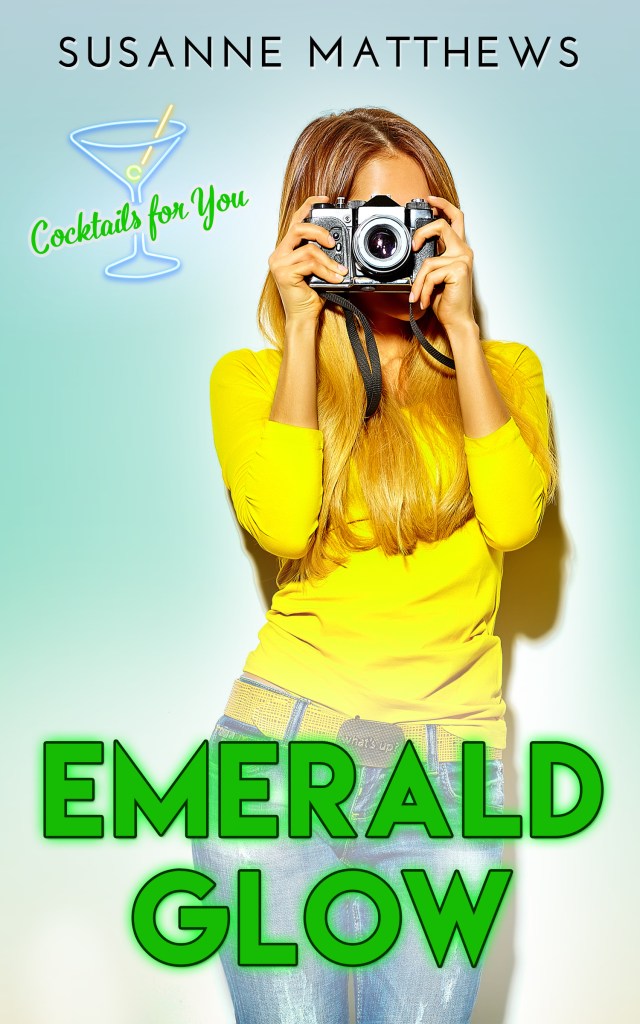
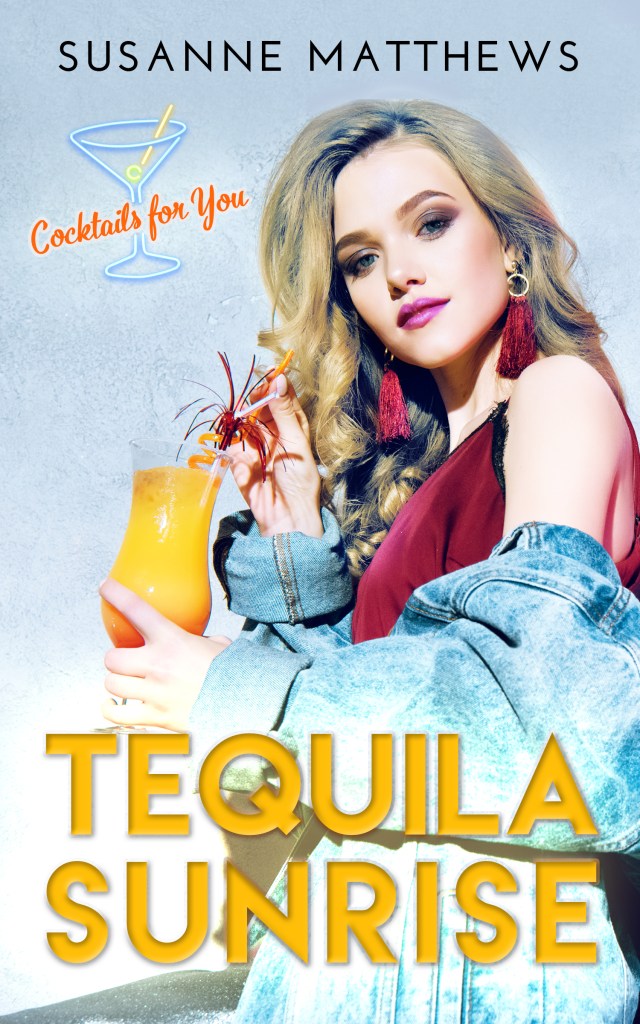
Each of my “I” books is a blend of my experiences–I did go to Mexico, Tequila Sunrise: I did have trouble finding the perfect doll for my daughter one Christmas, Champagne Cocktail; I do love people who can sign, especially since I can’t, Buck’s Fizz; I’m fascinated by Egyptology, The Tipsy Pig; I took the Rockey Mountaineer, Emerald Glow; and I’ve suffered Writer’s Block and have been to NYC, Make Mine a Manhattan. My newest book in the series, Sea Breeze deals with something dear to my heart, my mother’s delusional disorder. That book, now available only in paperback, with be released later this year. But, believe me, most of the stories were fleshed out in my imagination–there it is again. Each book is named for a cocktail and the recipe is included in the story. You can find purchase links for all my books on my website. https://mhsusannematthews.ca/

So, that’s it for today. Don’t forget to check out the other posts. https://docs.google.com/spreadsheets/d/1nuoAOJ-BUAXE1Yl2yIArhUHInj902PHVX6_gL4oKiSo/edit#gid=1195767304

Daring Protectors Box Set on sale

Where danger and passion collide!

FIVE FULL-LENGTH ROMANTIC SUSPENSE NOVELS FROM NEW YORK TIMES & USA TODAY BESTSELLING AUTHORS
When danger happens, these strong men and women dare to fight—dare to protect. Dive into this fast and furious romantic suspense boxed set. It’s a tough world out there, but Daring Protectors love as hard as they fight. Between car chases, gunfights, devious killers, mob hitmen, abusive ex’s, and cartel bosses, the action and romance are nonstop when Daring Protectors meet their match.

JAKE, THE JUSTICE BROTHERS by Taylor Lee – USAT bestselling author
Sam Delgado, the new Tribal Police Chef, determined to go it alone, is as brazen as she is beautiful. Jake Justice is the acknowledged law enforcement leader in the state—and the one Justice Brother no woman has been able to snare. The murder of a young Native girl threatens their professional relationship and puts their passionate love affair in the crosshairs. Together they discover that Justice—like Love—isn’t always fair or easy.

AXE, BAD BOYS FOR HIRE by Rachelle Ayala – USAT bestselling author
Leanna Rivera leaves safety behind when she hires Axe Salvadori to search for a daughter she gave away in Mexico. There’s the cartel, Leanna’s ex, Axe’s past, the human traffickers, and Carmelita herself. No one is as they seem, and nothing is safe—least of all Leanna’s heart. When the stakes are nothing less than the safety of her daughter, can Leanna count on Axe, a man with demons of his own?

SPECIAL AGENT KANDICE by Mimi Barbour – NYT & USAT bestselling author.
Sweet doesn’t necessarily mean weak… some men need to understand that.
Special Agent Kandice wants to be tough like the others on her team. When Dan Black, her new hard-ass boss arrives, he’s the one she’s out to impress. Being the chief hostage negotiator at a bank heist starts the process. Being stalked, kidnapped and beaten helps see it through. In the end, pulling the trigger comes easy…

BEDROOM THERAPY by Rebecca York – NYT & USAT bestselling author
Phone sex and fantasies can’t keep sexual advice columnist, Dr. Amanda O’Neal, safe when a serial killer has her in his sights. Enter P.I. Zachary Grant, a man focused on protection and clues—or, sexual fantasies, his and hers. While anything is possible in the bedroom, can Zach keep Amanda safe before the killer strikes again?

BARBARA’S PLEA by Stacy Eaton – USAT bestselling author
Barbara lives in constant fear of her husband. She finally summons the courage to leave with their young daughter, Allie, but dreads the moment her husband learns of their escape. Barbara flees to a safe location where she meets Grey, an unemployed construction worker also living on the property. When Grey falls inexorably in love with not only Barbara, but also her daughter Allie, he vows to do everything he can to protect them from her husband who is out for revenge.

Only 99 cents April 10th, 11th, and 12th. Free to read in KU. Get your copy today! https://www.amazon.com/Daring-Protectors-Passion-Collide-Protect-ebook/dp/B07SLSMTLL/

The A to Z Challenge Blog 2022- the Letter H

My arm is sore today as I got my send booster aka my fourth shot of the Pfizer vaccine yesterday, a small price to pay for surviving this pandemic.

Today’s letter is H. There were so many choices–hero, heroine, hyperbole, but I chose history. Today, H is for historical romance. Historical romance is a fictional story set in the past–at least fifty years ago, which would make the sixties history. It can contain mystery, suspense, exploration, and of course love, but these elements are dealt with in the context of the past.

Lately, many different self-interest groups have been hard at work trying to sanitize and rewrite history. People who were revered for their part in founding this country, Canada, have had their statues removed, their names taken off schools, even struck from records for their involvement in shameful practices. You can pull down all the statues in the world, but what was done in the past–good and bad–can’t be undone. Will hiding it make things better? For some, maybe, but sooner or later the sins of the past resurface.

There’s a very real danger in judging the events of two or three hundred years ago through twenty-first century eyes. And, while I know the road to hell is paved with good intentions, we have to remember that nothing can change what happened. All we can do is make sure is no longer happens and doesn’t happen again.

Writing historical romance can be challenging for many reasons. Unlike contemporary romance or sci-fi, you can’t really make it up as you go. You need to do research of the time, the place, the politics. Novels set during the war have to deal with slavery. I was a fact, and you can’t just pretend it didn’t happen. On this continent, both New France and the Thirteen Colonies fought wars with their indigenous peoples. It happened.

Sadly, throughout history, people have always tried to do just that. To the conqueror go the spoils, and the right to record history as they saw it. in George Orwell’s novel 1984, there’s even a ministry whose sole purpose is to sanitize history. The Allies tell the story of the Second World War, not the Nazis.

I have written four historical novels, three of them based on the early development of New France, Canada, and a fourth on the colonization of the islands in the Caribbean, specifically St John. Among the problems I faced were a lack of historical records. The documents I could find alluded to the various people and situations I mentioned. In my Canadian Series, I’ve based the stories in part of what I know of my own ancestors. The Price of Honor and The Price of Courage, trace my Poirier roots here in this country. There’s more to write and hopefully I will one day. If you enjoy historical fiction, why not give some of mine a try? Find links to my books here: https://mhsusannematthews.ca/

Check out the other posts here.  https://docs.google.com/spreadsheets/d/1nuoAOJ-BUAXE1Yl2yIArhUHInj902PHVX6_gL4oKiSo/edit#gid=1195767304

The A to Z Blog Challenge 2022: the Letter G

Welcome to a cool, rainy Friday, with the prospect of a similar weekend. Do you enjoy the rain? I don’t, especially at this time of year. My arthritis aches and makes life miserable. So how do I escape? Inside my writing, of course.

Today’s letter is G. To me, G stands for goals. Everyone talks about goals. For some, it’s getting the puck into the net in a hockey game or the ball into the net at a soccer game. For others, it’s a vision they have for their future or their business, both short term and long term, something they’ll work at and commit to achieve, something they’ll use to define their success or failure.

Setting goals is an important part of who we are and how we see ourselves. The acronym SMART has become the go-to method for setting goals. Deciding on a short-term or long-term goal isn’t easy, but it’s doable if you make it SMART: specific, measurable, attainable, relevant, and timely. For your goals to motivate you, experts suggest you write them down. That action and seeing the words on paper makes them feel tangible and real. But that’s only the first step in the process. To meet your goals, you need to plan the steps that will get you there. In other words, to achieve long-term goals, you need to set-short term goals.

As an author, it’s my job to create characters who are “real” to the reader. They need to be the kind of fictional character that will come alive as the story progresses. Let’s look at one of my characters from Secrets and Lies, a Vengeance is Mine novel, also part of the Books of Braden series, compiled with other authors.

Here’s the blurb:

DEA agent, Emily Shepherd, is after the Chef, a crystal meth cook, who sets up labs for the Mexican cartel and walks away—the same man responsible for the deaths of her husband and unborn child. Her search leads her to Braden, Iowa, a small town just right for the Chef’s specialty. But identifying her quarry won’t be easy when she’s up against a woman who sees her as a threat, a male chauvinistic deputy sheriff, and an attractive school principal who might just be at the center of it all.

Jackson Harris has sworn off women. Life is satisfactory, if lonely, until he meets a hazel-eyed damsel in distress who gets under his skin and triggers that protective instinct of his. There’s a killer in town, one who may or may not be a notorious drug lord. Finding him, and keeping his town, his students, and Emily safe, may be harder than he thinks.

Emily’s goal setting starts long before the story does. She was severely injured in the blast that killed her husband and her unborn child, losing part of her leg. Her long-term goal is to get the person responsible. But to get there, she has to checkoff several other items–her short-term goals. First, she had to learn to walk with the prosthesis and learn to look after it. Second, she had to prove that she could get back to work and be effective as an agent. Third, she had to convince her boss to give her the case–no small feat. Fourth, she had to relocate to Braden, the devastated town where the agency thinks the Chef will set up shop. Fifth, she needs to identify the faceless villain who’s left so much death in his wake. Finally, she must figure out how to catch him. Sounds easy, right? Wrong. Each of those steps is dogged by problems both physical and emotional, by characters who help and hinder her plans, and by the Chef himself, a killer determined not to get caught.

Are Emily’s goals SMART?

Specific: catch the Chef

Measurable: the man will be in jail, his operation destroyed

Attainable: Yes. She knows more about this killer than anyone, and this time, there’s no one on the inside to feed him information

Relevant: She needs to bring him to justice; she needs her revenge for all he’s done to her, all he’s cost her. Without it, she can’t move on.

Timely: He needs to be stopped before he establishes his lab and bodies start dropping, three to six months in the past.

Are you a goal setter?

Come back tomorrow for another post on my writing experience. Chek out the other posts here: https://docs.google.com/spreadsheets/d/1nuoAOJ-BUAXE1Yl2yIArhUHInj902PHVX6_gL4oKiSo/edit#gid=1195767304

The A to Z Challenge 2022: the Letter F

April showers bring May flowers, gloomy days, as well as flooding. Welcome to a miserable, wet April day, but for me it won’t be a wasted day since I can write rain or shine!

While today’s letter could stand for flooding, to me the letter F is for figurative language. Figurative language is the practice of using words in a unique way to explain yourself and create an image in the mind of the reader without using words in their literal meaning. It gives an unusual flourish to written or spoken language and can be a wonderful way to explain something complicated.

There eight types of figurative language I use regularly are: personification, onomatopoeia, hyperbole, alliteration, simile, metaphor, idioms, and the adage I mentioned on the first day of this year’s challenge.

In my books and in my own daily speech, I use these all the time, and you’ll be surprised to learn that you do, too. Let’s look at each of them quickly.

Personification: Essentially, personification is the art of giving human qualities to something that isn’t human. An example could be: that piece of cheesecake is calling my name, or did you hear that wind howl?

Onomatopoeia is the act of using words that mimic real sounds, like don’t bang the door, or stop shushing me.

Hyperbole is exaggeration. For example, that dress costs a fortune.

Alliteration requires you to use two or more of the same letter or sound in a row, as in Peter Piper picked a peck of pickled peppers. It’s often used in marketing, such as Bed, Bath, and Beyond, Coca-Cola, Krispy Kreme, Coffee Crisp, and in literature with character names like Peter Pan, or Bilbo Baggins–you get the idea.

Simile is one of the most frequently used examples of figurative language. It’s a comparison using like or as. Examples include he eats like a pig, she’s as skinny as a rail, or he’s as tough as nails.

Metaphors are like similes in that they compare two unlike objects but do so without the use of like or as. Examples include, she’s a bear without her coffee, he’s lost so much weight that he’s a shadow of himself, or he’s a bull in a china shop.

Lastly, we have idioms, which are words or sentences not intended to be taken literally. Examples include it’s raining cats and dogs–or men as the song says, it’s a piece of cake, or if the shoe fits.

Finally, we can recall that an adage isa proverb or statement generally proving to be true, after all, the early bird really does get the worm.

Check out the rest of today’s posts. https://docs.google.com/spreadsheets/d/1nuoAOJ-BUAXE1Yl2yIArhUHInj902PHVX6_gL4oKiSo/edit#gid=1195767304

Insecure Writer’s Support Group Blog Post for April

Welcome to April! Mother Nature is being a touch kinder to us, but anything weather-wise is possible at this time of year. While I long for warmer sunny days, I’m grateful for anything that isn’t snow and freezing temperatures now.

This month’s question is a quick one for me. April 6 question – Have any of your books been made into audio books? If so, what is the main challenge in producing an audiobook?

The answer is simple. One of my books is supposed to have been put into audio format by the publisher, but if it has been, I’ve yet to be informed of its publication.

As far as putting other books of mine into audio format, the answer is no. The reason is simple. It’s too expensive and there is no guarantee that any of the costs will be recovered.

have a nice month. Looking forward to a better May.

Check out the other answers here: https://www.insecurewriterssupportgroup.com/p/iwsg-sign-up.html

The A to Z Blog Challenge 2022: the Letter E

We have another sunny day today, not a warm one, but things look promising later. April is the month of surprises here in Eastern Ontario. The snow melts revealing all the rubbish tossed out and buried during the winter months as well as grass damaged by moles etc. It’s one of the ugliest months of the starts out as one of the ugliest months of the year, but by the end, flowers start to bloom, the trees bud, and the promise of spring is fulfilled–but we are a long way from there yet still wearing winter coats around here.

Today’s letter is the letter E for editing. Every writer knows that editing is a lengthy process that involves preparing a manuscript for publication by checking its mechanics such as grammar, spelling, and word choices, as well as its flow, and its adherence to the rules of skillful writing as they apply to point of view, characterization, and plot. The editing process involves correction, condensation, organisation, and other modifications necessary to produce a correct, consistent, accurate, and complete piece of work.

Ask any writing guru, and they will tell you that editing should begin only after the first draft is written in its entirety, following your outline, if you use one, or writing whatever pops into your mind if you’re a pantser, like me. Try as I might, I can’t do it. I edit my work as I write it. If I had to describe my personal writing style, I could compare myself to a brick layer. I place the first brick, then the second, then the third and so on until the first row is complete–or in my case the page. Then, like that mason, I go back and check that each brick is straight, undamaged, or otherwise marred. If he’s satisfied, he adds mortar to the top and moves on, just as I do, knowing he may have to go back again before he’s ready to add more layers. Is it time consuming? Yes, but for me, it’s the only way I can write.

Check out the other blogs here. https://docs.google.com/spreadsheets/d/1nuoAOJ-BUAXE1Yl2yIArhUHInj902PHVX6_gL4oKiSo/edit#gid=1195767304

The A to Z Blog Challenge for 2022: the Letter D

Welcome to a sunny Tuesday morning. It’s so good to be able to see the sun and feel the warmth on your face. So many are deprived of the pleasure, and while I may complain and moan and groan in the morning, I’m still on the right side of the grass.

Today’s letter is D and I’ve chosen to talk about dramatic irony. Dramatic Irony is found essentially when the audience of a movie, play, etc. or the reader of a book understands something about a character’s actions, motives, or an event that the characters are not aware of. In my writing, dramatic irony can be found across the spectrum of my work. For example, in Royal Flush, my latest All for Love Series novel, the heroine has a secret shared with the reader, but not the hero. In Fire Angel, one of the books in my Vengeance is Mine Series, I added a third character POV, so the reader knows what motivates the crimes but not the sleuths trying to solve it.

When it comes right down to it, dramatic irony helps the reader understand what makes a particular situation more important to one character than another. In Sea Breeze, the Cocktails for You Series book I’ve just completed and that will be released in paperback later this week, there is dramatic irony in that everyone involved except the heroine knows what Uncle Seamus really wanted. How she reacts to the discovery moves the story along.

The best example of dramatic irony that I can give you comes from Just for the Weekend, another of the All for Love Series, since the entire book is based on just that. According to the blurb,

School’s out and it’s time to play with the grown-ups. Kindergarten teacher Cleo James is in a rut and needs a change. For the last three years, she’s been at her widowed dad’s beck and call, but enough is enough. When her best friend suggests a weekend in Vegas at a sci-fi convention, she sets aside some of her inhibitions, and agrees to visit Sin City. After all, it’s just for the weekend. What could possibly go wrong?

Multimillionaire Sam Mason is sick of gold diggers. He’s looking for someone who’ll fall for him, not his wallet. The opportunity to disguise himself and mingle might just be the distraction he needs before embarking on his next big job. And, what harm can come from playing make-believe for a few days? When he meets a gorgeous redhead dressed to resemble a green-skinned slave girl, he’s entranced, and it gets even better when he realizes she’s mistaken him for a Chippendale. Between the sexual attraction and too much alcohol, he wakes up two days later married to his redheaded beauty. Sam’s head over heels in love with his bride, but she’s vanished. Finding her will be a lot harder than he thinks, especially when she’s played the name game, too.

You can find this and all my other books at https://www.amazon.com/Susanne-Matthews/e/B00DJCKRP4

There you have it. D is for dramatic irony. I hope you enjoy the rest of your day. Please check out other bloggers here. https://tinyurl.com/AtoZ22 

Tuesday Tales: From the Word CAREFUL

Welcome to this week’s Tuesday Tales, the weekly blog where a select group of authors share their work in progress with you. This will be my last post from Sea Breeze since the book is finished and will be posted in paperback format later this week. Our word is CAREFUL.

“Before Seamus could sign the papers,” Sean continued, “he worsened and had to be too heavily sedated to legally sign anything … He’d hoped to stop the pain medication long enough to be able to, but he worsened and died. Before he did, he made me promise to bring this matter to your attention. You’re under no legal obligation to offer Cal the same deal.”

“Is Cal still interested in investing in the resort?” I asked, my heart landing square in my stomach. Was he being nice to me only to secure this investment?

Sean nodded. “He is. We discussed it just before I sent you the notification of inheritance. In fact, if you’d decided you didn’t want the resort and wanted to sell it, he would’ve made you an offer for it.”

“Where would he have gotten the money? You said the resort is worth twenty million dollars.”

“Cal has some money, including the hundred thousand currently in an escrow account, the boat, the tour company, the building, and the potential income he gets from his paintings. He spoke to the rest of us, and we were all willing to put up whatever we could for collateral to help him secure the mortgage.” He shrugged. “The bank manager had agreed to advance him the money since keeping the Sea Breeze in local hands means a great deal to everyone. But now that you aren’t going to sell, it’s a moot point. You should know that Cal has already invested a significant amount of time and his own money in the kitchen renovations, but as I said, you’re under no obligation to honor what your uncle wanted. What’s in the will is all that matters. A contract that was never signed is worth less than the paper it’s printed on, but I had a moral obligation to your uncle to at least mention this to you.”

“I see. Does Cal know about the insurance policy and the bank account?”

Sean shook his head. “To my knowledge, no. He might assume a careful man like Seamus would’ve had life insurance … but Seamus was closemouthed about his personal life and finances.” He reached for a box beside his desk. “This contains all the condolences we received from former regulars at the resort. When you reopen, you’ll have no problem filling the place.” He placed the box beside me. “What do you want to do about Cal?”

That’s it. Stay safe and don’t forget to check out the other Tuesday Tales

Blogging A to Z 2022: the Letter C

Happy Monday! When I was working, I dreaded Mondays, not because i didn’t want to work, but because the students tended to be sleepier and less alert Monday mornings, especially the older ones. Now that I’m retired, there isn’t a great deal of difference on any day of the week.

Today, our letter is C. Today the letter stands for the word characterization which, for my purpose, means the creation or construction of a fictional character. The way this is achieved is best explained using the acronym, PAIRS: physical description, action, inner thoughts, reactions, and speech.

Let’s start with physical description. Some authors find online images of a person who best describes the character they have in mind. I don’t usually do that, but when I’m writing a contemporary romance where the hero and heroine or heroine alone with be featured on the cover, it helps. For example, let’s look at the cover of one of my contemporary romantic comedies, Make Mine a Manhattan, a book in my Cocktails for You series.

Here’s the blurb:

What’s an author to do when, thanks to writer’s block, she’s hopelessly stuck?

With only eight weeks left to finish her newest novel, bestselling author Sydney Sanders, aka Robin Langford, is stumped. On impulse, the thirty-three-year-old introvert decides to take her agent’s advice and shift gears, but instead of going on a short vacation, she decides on hands-on research. Immersing herself in her story and assuming her heroine’s identity, she heads to Manhattan to live out the plot. What could possibly go wrong?
As Savanna Long, she boards the train, expecting a quiet ride and time to refresh her muse for the chore ahead. But a lot can happen during the thirty-eight-hour trip, especially with her imagination and the drop-dead gorgeous passenger in the next car.

My Robin was a shy woman with a secret. I didn’t want to make her drop-dead gorgeous, but I needed to transform her from the way she saw herself into the heroine she wanted to emulate. So, the first step on her journey is a makeover–we all know how much fun those can be.

The second letter in PAIRS stands for action. The character must do something that creates the circumstances of the story. In this case, Robin decides to go to New York City as her fictional character to see if she can unblock her muse with hands-on experience.

The I in PAIRS stands for inner thoughts. What’s she thinking? How does what she’s thinking reveal her character? Is she confident? Is she worried? Is she convinced she’s going to fail? All these aspects together slowly build the character. Robin is an introvert. How do her inner thoughts get her to act like a risktaker rather than the shy, reserved person she is?

The R in PAIRS stands for reactions. In science we learned Newton’s third law: For every action, there is an equal and opposite reaction.  When building character, the author has to add how the character will react in a particular situation. For example, in the story Robin bumps into a stranger in a coffee shop, dumping her ice capp all over him, most of it landing on his abdomen and lower and the chest of her shirt. How does she react? Because her reactions can and will set a vital aspect of the story in motion.

The last letter in PAIRS is speech. It’s more than what a character says, it’s how they say it. For example, a highly educated author isn’t going to say, “ya wanna eat?” She’ll enunciate and use her grammar properly. “Would you like to get something to eat?” Sometimes, tossing in foreign words is necessary to make a character more realistic, too, especially if that aspect of the character is what makes him or her different.

There you have it. C is for Characterization. I hope you enjoy the rest of your day. Please check out other bloggers here. https://docs.google.com/spreadsheets/d/1nuoAOJ-BUAXE1Yl2yIArhUHInj902PHVX6_gL4oKiSo/edit#gid=1195767304