
Like the woman in the picture, I often find myself just sitting outside, admiring the beauty of any given day. More importantly, I sit there, letting the wheels inside my head turn, coming up with new ideas, new scenes, and new phrases to use in my next book. Whenever I hear a friend say, don’t put that in a book, I laugh. Invariably, it finds its way in.
Most recently, I decided to try something different when I came up with the idea for my Evie Chambers series. I was working on my opus, Listen to the Stones, which was and is taking longer to finish than I expected, when I decided to participate in the National Novel Writing Month activity known as NaNoWriMo. So I set the book aside to prove to myself that I could actually write, finish,and edit a book in six weeks or less. It was true that I had interrupted my writing throughout the year for two other books, Love at the Pickleback and Guarding Her Heart, but this represented only a small fraction of what I’d hoped to write this year, leaving me with several projects still in limbo.
Of all the genres I write, mystery and suspense are my favorites, and I don’t seem capable of writing anything without injecting a touch of one or the other into any story. Recently, I’ve been hung up on mild paranormal, but I’d been considering trying my hand a cozy mysteries. I came up with the idea for a series with a woman sleuth, one who’d suffered hardship in her life and was reinventing herself. I also wanted to set the books in Canada. I have no idea how the United States is going to change over the next four years, but I do know what will happen or be happening here in my homeland. It’s always best to work with what you know.
Canada has a lot of interesting places to visit and things to see, so I thought why not use those facts and places as the backdrop for my new series? For example, the television police drama, Hudson and Rex, one that qualifies as cozy compared to others like FBI Most Wanted, is set in Newfoundland, and gives viewers a glimpse of that province. Another series, again more cozy than gory, is Murdock Mysteries, the story of an enterprising inventor detective, set in Toronto, Ontario at the turn of the twentieth century. In many of its episodes, the show moves out of the city to show off other parts of Ontario. In one episode, the show was set in Montreal; in another, it was in Victoria, BC.

I decided my private detective could take cases anywhere in the country and solve them. I decided to start with a place I visited three years ago, the Pointe au Pere Heritage Site with its lighthouse, submarine, and most importantly, the RMS Empress of Ireland Museum.
Welcome to the first book in the Evie Chambers Mysteries series. These books will all be a combination of romance suspense, cozy mystery, historical information, humor, and perhaps even some mild paranormal elements, all wrapped up into neat bundles designed to entertain you. I’ve chosen to write them in the first person, so that it’ll feel as if Evie is speaking to you.

Like my newest heroine, I have a vivid imagination and love solving puzzles. A few years back, the post office made a mistake and accidentally mixed up my name with that of another person who had died. For the record, seeing an envelope with your name on it and the stamp, DECEASED, is terrifying. The post office had returned a bank statement to the bank and then the bank had frozen my accounts—no transactions in or out, which meant my salary had been sent back to my employer. It was all bad and took almost a month to straighten out. Proving that you are who you say you are isn’t always easy.
My personal horror show took place before the computer age when a lot of things were done by hand. In today’s world, where we are constantly bombarded with warnings about hackers, identity theft, and fraud, I’m surprised it doesn’t happen more often. But, I write fiction, and even if my initial incident is something that could happen to anyone, I needed a viable plot behind it for my heroine to solve.
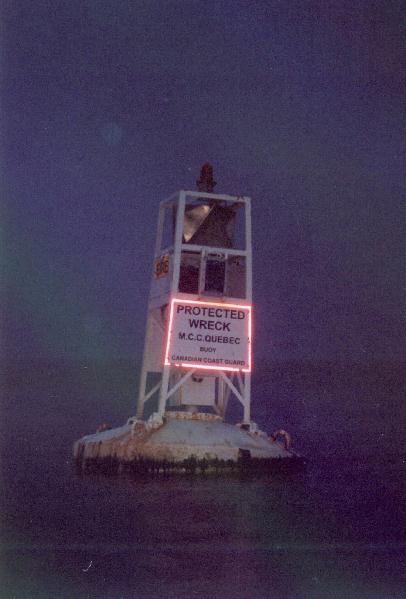
Until a few years ago, I had never heard of the RMS Empress of Ireland, or the fact that the ship’s demise is considered the worst peacetime maritime disaster in Canadian history. Even the scholars and experts can’t agree on why the incident has been neglected. While there is a museum dedicated to its sinking, and the area around the wreck itself is a National Historic Site, it doesn’t get the publicity other sites do. There are some books out there based on the sinking, most of them non-fictional accounts of the event, but even with that, few people, other than surviving relatives, those who live in the immediate area, and divers looking for a challenge, have ever heard of it.
On May 29, 1914, the RMS Empress of Ireland sank in the St Lawrence River after being struck by the SS Storstad, a heavy laden Norwegian coal ship, that sat deep in the water. Are your synapses firing like mine did? Of all the ships that brought goods and passengers to Canada from various countries, what are the odds that two ships hailing from the same country should be involved in the two worst maritime disasters in our history? It’s quite the coincidence—if you believe in coincidence.
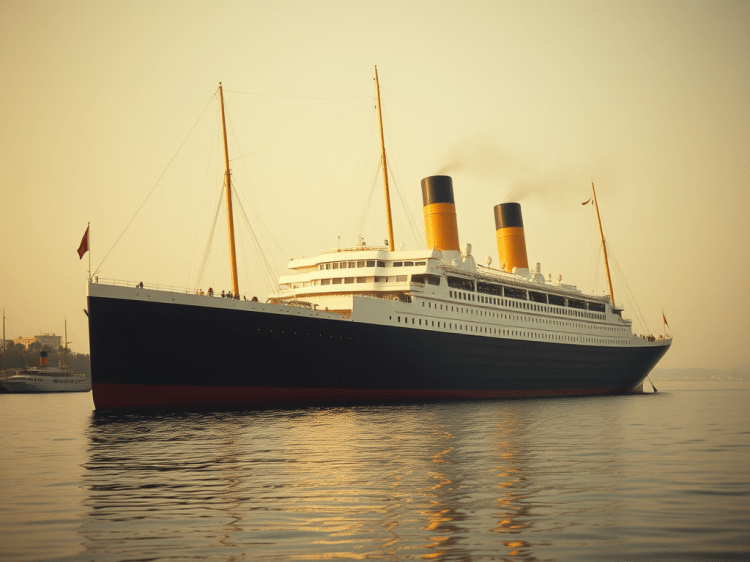
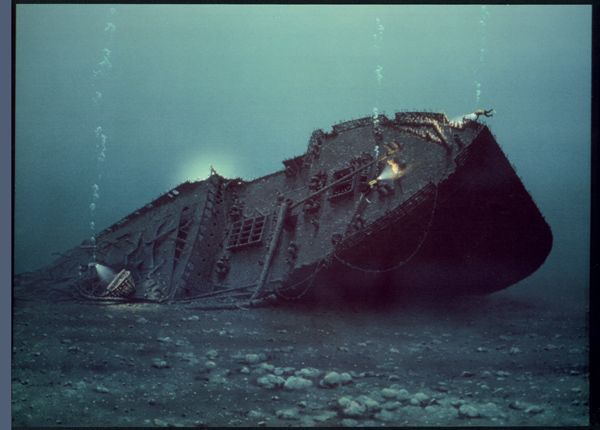
The Royal Mail Ship Empress of Ireland left Quebec City at 4:30 p.m. on May 28, 2014. Less than ten hours later, it was at the bottom of the river. The ship sank in fourteen minutes, not enough time for most of the crew and passengers to escape. A total of 1,032 people died, while 465 survived, but only 188 bodies were ever recovered. According to divers who have been down to the wreck, the ship is filled with skeletal remains. Essentially, it’s a massive tomb, for an estimated 700 souls.
So, considering 840 passengers died, why so little interest in the ship? There wasn’t anyone particularly famous aboard if you ignore a British acting couple, a colonel in New Zealand’s 3rd Mounted Division, the head of Canada’s largest pharmaceutical company, a few other prominent business men, and a former British Member of Parliament returning from a hunting expedition. While there was an inquiry immediately following the disaster, the onset of World War 1 on July 28, 1914, took it out of the limelight very quickly.
Three years ago, on a bus tour of the Gaspé region, I visited the RMS Empress of Ireland Museum at Pointe au Père, a small village near the town of Rimouski, Quebec. After viewing the exhibits, especially the film showing how the accident occurred, my mind was filled with seemingly unanswerable questions. Why had the ship even left Quebec City Harbor, especially when there seemed to be issues, or bad omens if you will, from the onset?
According to some sources, the ship’s rudder had malfunctioned previously and some thought it might be defective—why sail like that? Why not have the rudder repaired first? Another question that bothered me concerned the fog that was at the center of the entire mess. I’ve driven through maritime fog where you can barely see five feet in front of you. Since the threat of fog was present, especially sudden, thick fogbanks that rolled in unannounced, why did the captain of the Empress not put in place all of the safety precautions required in such a case the second he saw the fog? Why alter his ship’s course? And most importantly, claim to have stopped her engines when later evidence proved that to be false? Why wait to order the watertight doors and portholes closed and full speed ahead moments before the collision? It was intriguing to discover the tale about the ship’s cat, an animal that had never missed a sailing, who refused to get on the ship that day and apparently watched it leave from the safety of the pier. What did the animal know that the ship’s passengers and crew didn’t?
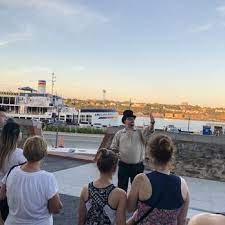
Take the ghost walk in the port of Quebec City, and you will learn about the curse surrounding Captain Kendall himself—if you believe in such things. Or, cross the river and take a walk along the shore near the Pointe au Père Lighthouse. Will you see mysterious lights on a foggy night? Will you hear the sound of horns, blowing in the darkness or the cries of people muffled by death and time? Since 2009, six divers have died while investigating the wreck. Their bodies were recovered, but are their souls now among the ghosts who dwell in 130 feet of icy water in the St Lawrence River? You decide.
Another point that fascinated me about the wreck of the Empress of Ireland was the fact that a key witness was found dead before he could testify at the inquiry, and later, there were four men murdered in Quebec City, men suspected of having information about the ship’s demise. No one can prove anything, but as I said, I don’t believe in coincidence.
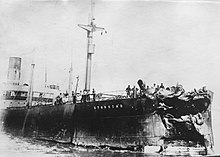
The inquiry held after the incident found the Norwegian ship culpable—he’d altered his course—and moving at top speed, had struck the Empress amidship at a 45 degree angle twenty feet below the waterline. Instead of keeping his ship attached to the Empress, essentially plugging the hole, he allowed the two ships to drift apart, opening the gaping hole and sealing the Empress’s fate. To many scholars and investigators, the fact that the Empress’s own captain never ordered the watertight doors to be closed spoke of negligence on his part and definitely contributed to the ship’s sinking. Interestingly enough, both ship captains were given other ships and continued to sail.
In addition to passengers, the Royal Mail Ship, as its name implies, carried mail, along with 2,600 tons of coal, two containers of currency, valued at more than one million dollars, and 252 ingots of silver.
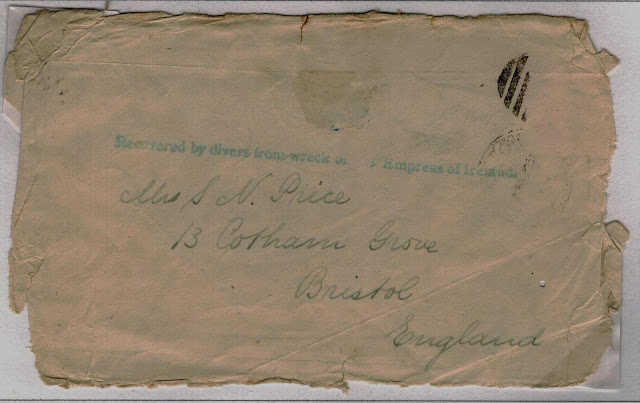
Immediately after the sinking, Canadian Pacific, the ship’s owners, sent twenty divers in atmospheric diving suits down to the wreck ostensibly to see if she could be refloated, search for bodies, and recover the mail. My question is this, given the testimony of those who survived, refloating the ship was impossible, so why did those men really go down there, knowing how dangerous the current was? What was in the mail that made it so important? Secret dispatches concerning the war that started within two months of the incident? Information pertaining to the Black Hand, a secret Serbian society said to be active in Canada at the time, a group that played a key role in the assassination of Archduke Franz Ferdinand in 1914 and precipitated the war?

Nationalism was strong at that time in all of Europe, not just Serbia. The Irish were determined to get rid of the British yoke. Could the Irish who’d settled in Canada have tried to encourage their compatriots? Again, all suppositions. No doubt those divers were sent to recover the silver on board and other unspecified valuables. One diver was killed when he apparently slipped from the hull of the wreck and fell 65 feet to the riverbed, tearing his air hose. Shortly afterward, recovery efforts ceased. A total of 318 bags of mail, 251 bars of silver, worth over a million dollars, and other unidentified valuables, as well as a few bodies were recovered. Does that leave one ingot of silver still missing? Maybe, and what else? Who knows what’s hiding in the hole of the ship buried in silt?

Since 1964, several diving expeditions to recover artifacts took place, but permission to do so was revoked when too many of the divers started taking and keeping souvenirs. Today, you can still dive the wreck with accredited dive companies, but it’s illegal to remove anything from it. Divers call it the bone yard since there are skeletons throughout the ship including those of sixty stewards in their rooms. I don’t get it. You have to be pretty crass to steal from the dead.
With all of this infromation buzzing through my head, I finally settled on the main plot of Evie’s first case. While the information on the Empress of Ireland is as real and factual as I could make it, everything else about Evie’s case and the characters involved is pure fiction, but I hope you’ll enjoy seeing how I used my research to create the story.
Grab your e-copy of A Case of Mistaken Identity today. The paperback will be released next week. Check my blog for details.
 Living the Dream
Great post. Loved all that history👏
LikeLiked by 1 person
Thanks. Actually, you inspired me to post something about my country’s history in all the great posts you’ve made about yours. I thought it might also generate interest in the book. Fingers crossed that it will.
LikeLiked by 1 person
Well, you’ve inspired me. A little closer to xmas I’ll download this book of yours. Not my usual genre but lets start the new year by sampling something different. Yee ha.
LikeLiked by 1 person
Thank you!
LikeLiked by 1 person